First Trimester Exercise Guidelines: Safe Early Pregnancy Workouts PDF
Sep 15, 2026
Safe First Trimester Workouts and Guidelines
Finding out you are pregnant brings a wave of excitement, a long list of questions, and the realization that your daily routine is about to change. If you love staying active or want to start, you are likely wondering: Is it safe to exercise during the first trimester?
The short answer is yes.
Regular physical activity is safe and highly recommended for most healthy pregnancies. While you might not be showing yet, your body is working overtime behind the scenes.
Designing a workout plan tailored to these early changes can help ease morning sickness, fight fatigue, and build a strong foundation for the months ahead.
This guide breaks down the official medical guidelines, the best exercises to try, movements to avoid, and crucial functional areas to focus on during your first trimester.
Official ACOG Pregnancy Exercise Guidelines
The American College of Obstetricians and Gynecologists (ACOG) states that if you were active before pregnancy, it is generally safe to continue your routine. If you were sedentary, the key is to start gently. At PregActive, we are aligned with ACOG recommendations for exercises we prescribe.
When planning your weekly routine, aim for these standard benchmarks:
The Weekly Target: Accumulate 150 minutes of moderate aerobic activity spread throughout the week, alongside two strength-building sessions. PregActive is uniquely designed so short sessions (12 minutes) can add up to the recommended 150 minutes.
The "Talk Test": You should never exercise to the point of exhaustion. Use the talk test as your guide if you cannot comfortably speak in full sentences while working out, your intensity is too high.
Managing First Trimester Symptoms Through Exercise
The first three months of pregnancy often bring unwelcome symptoms like nausea, breast tenderness, and extreme fatigue. Modifying how and when you move can help you stay consistent:
For Fatigue: Do not feel pressured to complete an hour-long workout. Short, manageable 10- to 20-minute sessions are excellent for boosting energy.
For Nausea: Avoid working out on an empty stomach. Eat a small, healthy snack before you begin to keep morning sickness at bay.
For Breast Tenderness: Invest in a highly supportive, high-impact sports bra to minimize discomfort.
For Dizziness: Hormonal shifts can cause sudden drops in blood pressure. Stay fully hydrated, avoid standing up too quickly, and skip hot environments.
Safe Exercises for the First Trimester
Opting for low-impact exercises keeps your heart healthy and muscles toned without overloading your joints. Excellent first-trimester options include:
1. Walking: A gentle, highly effective cardio option that is easy on the joints. Ensure you wear comfortable, supportive footwear.
2. Swimming & Water Aerobics: Swimming provides a full-body workout with zero impact, making it ideal if you are already experiencing early lower back aches.
3. Stationary Cycling: Your center of gravity will eventually shift, affecting your balance. Moving from an outdoor road bike to a stationary studio or spin bike eliminates the risk of falling.
4. Prenatal Yoga & Modified Pilates: These practices build incredible core stability and mental resilience. However, you must ensure your instructor is specifically qualified in prenatal fitness. Traditional classes often include movements that are dangerous during pregnancy.
5. PregActive 12 Minute Workouts
Safe for you. Safe for baby. Built by experts. Most programs demand 30+ minutes you don't have. PregActive 12™ changes that: proven 12-minute workouts that protect your pelvic floor, ease pain, and boost mood.
🚫 Exercises and Positions to Avoid
Your body is already producing relaxin, a hormone that softens your ligaments and makes your joints more prone to injury. Protect yourself and your baby by skipping the following:
1. High-Impact and Contact Sports: Avoid any activity with a risk of falling or collision, such as horseback riding, skiing, or intense boot camps.
2. Extreme Heat: Skip Bikram or hot yoga classes. Raising your core temperature too high presents severe safety risks for your growing baby.
3. Traditional Abdominal Training: Say goodbye to traditional sit-ups, crunches, and standard toe planks. These place unsafe pressure on your abdominal midline, which can trigger severe back pain or worsen abdominal separation (Diastasis Recti).
4. Flat-Back Positions: Do not lie flat on your back for prolonged periods during strength workouts, and never hold weights directly over your stomach.
The 4 Pillars of Functional Prenatal Training
Your training goals have officially shifted. Rather than working out for aesthetic reasons, your first-trimester routine should focus on functional training to prepare your body for the physical demands of labor and motherhood.
Ensure your program incorporates these four pillars:
1. Core & Pelvic Floor Loading
Your core comprises your pelvic floor, deep abdominals, and your diaphragm. Starting pelvic floor exercises (Kegels) and diaphragmatic breathing early on acts as a preventative shield, minimizing pregnancy-related incontinence and reducing pelvic girdle pain.
2. Hip Loading
Pregnancy puts your lower back at a much higher risk during unsupported forward bending. Strengthening your glutes and hips ensures you can safely bend over to pick up groceries, clean, or lift a child without throwing out your back.
3. Scapular Loading
As your breasts grow and your center of gravity changes, your shoulders will naturally want to round forward. Strengthening your upper back and stretching your chest muscles prevents postural imbalances and chronic mid-back pain.
4. Pectoral Loading
Motherhood requires serious upper body stamina. Building chest and arm strength now prepares you for the endless hours you will spend pushing yourself up from the floor, holding, and carrying your baby postpartum.
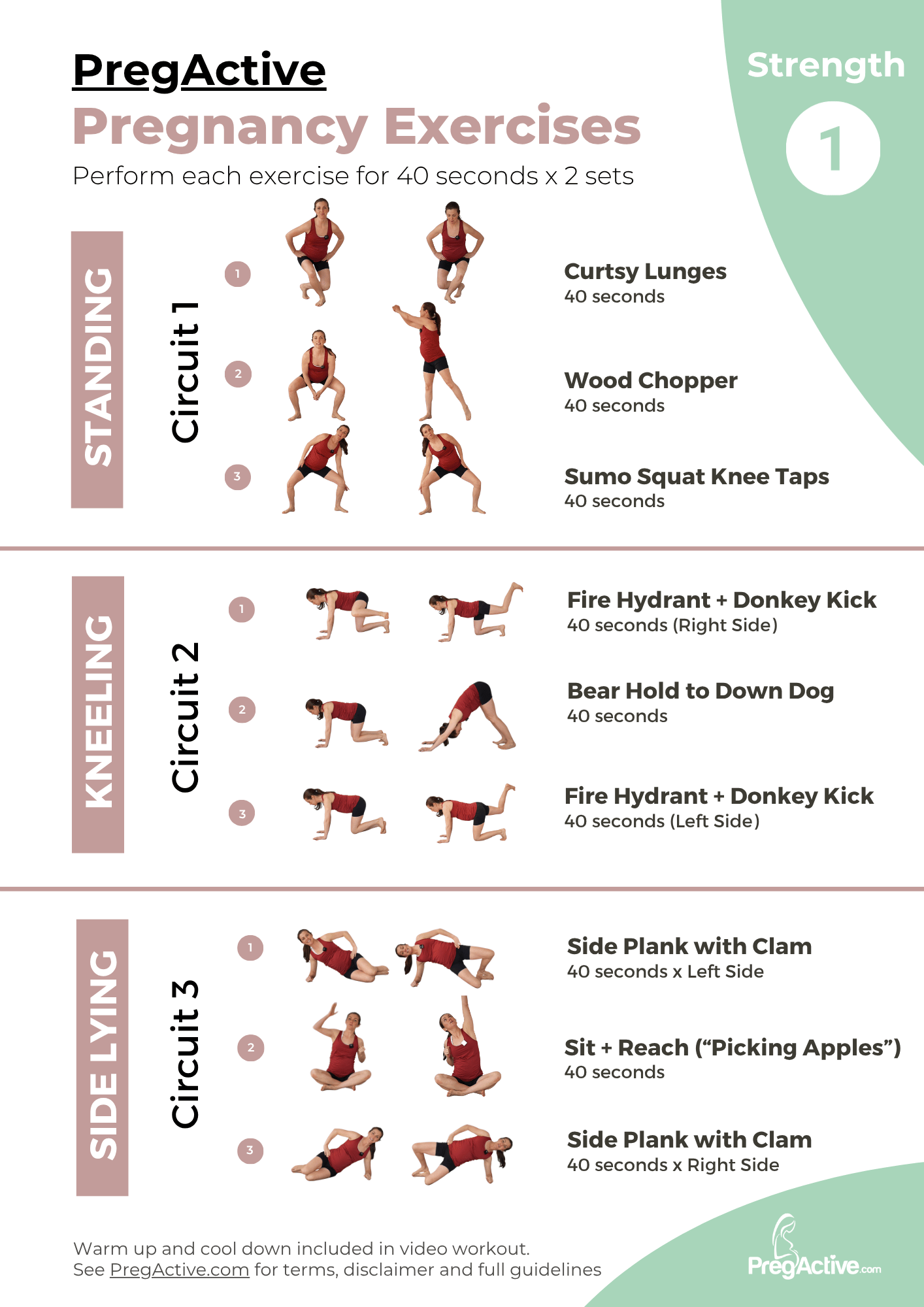
Quick Home Workout: First Trimester Core & Hip Activator
Try this quick, safe routine at home to build stability. Perform 2 sets of 10 repetitions for each movement, resting for 15 seconds between sets.
1. All-Fours Core Activation: On your hands and knees, take a deep breath. As you exhale, gently lift your pelvic floor and draw your lower abdomen up toward your spine. Hold for a moment, then gently release.
2. Side-Lying Clams: Lie on your side with your knees bent at a 45-degree angle, keeping your feet together. Keeping your pelvis perfectly still, lift your top knee as high as comfortable, then lower.
3. Bird-Dog: From an all-fours position, extend your opposite arm and leg out straight parallel to the floor. Focus on keeping your hips perfectly level and your core engaged to avoid arching your lower back.
4. Glute Bridges: Lie on your back with your knees bent and feet flat on the floor (keep this brief). Squeeze your glutes to lift your hips into a straight line, then lower smoothly.
🚨 Red Flags: When to Stop Exercising Immediately:
While physical activity is incredibly beneficial, you must always listen to your body. Stop your workout immediately and call your doctor or OBGYN if you experience:
1. Vaginal bleeding or unexpected fluid leakage.
2. Dizziness, lightheadedness, or feeling faint.
3. Severe headaches, chest pain, or sudden shortness of breath.
4. Regular, painful uterine contractions.
5. Swelling, pain, or redness in your calf (which can indicate a blood clot risk).
6. Decreased fetal movement (after 12 weeks).
Disclaimer: Exercise is not suitable for all pregnant women. Always consult your healthcare provider or OBGYN for personal medical clearance before beginning any new fitness routine.
ACOG
The American College of Obstetricians and Gynecologists (ACOG) says: "If you were active before pregnancy, it's safe to continue. If you were sedentary, start gently."
Your Body
Your body will be changing constantly and what you did before pregnancy may not be suited to you now.
Your health, and that of your growing baby, will become your primary focus in early pregnancy.
As a pregnant mama, your workouts must be specifically designed for the body changes you are experiencing. You may not be experiencing significant pregnancy weight gain yet, but soon it will impact on your workouts.
Official ACOG Guidelines
1. Your goal - 150 minutes of moderate aerobic activity per week and 2 strength sessions.
2. Intensity - Talk test: You should be able to speak in full sentences.
3. Safe Activities include: Walking, swimming, stationary bike, prenatal yoga, modified Pilates, light weights, modified planks/crunches.
4. Avoid: Contact sports, hot yoga, scuba, activities with fall risk (skiing, horseback).
First Trimester Symptoms and Exercise Tips
1. Fatigue - aim for shorter sessions (10-20 min)
2. Nausea - exercise after eating a small snack and avoid empty stomach.
3. Breast tenderness - wear supportive sports bra.
4. Dizziness - stay hydrated, avoid standing up fast, skip hot environments.
5. Bleeding / severe cramping - stop and call your OBGYN immediately.
Safe First Trimester Pregnancy Exercises
1. Swimming
Swimming when pregnant is one of the safest full-body exercises you can do. Make sure you adhere to all safety guidelines when pregnant.
Swimming provide you with a great muscle-building workout with cardiovascular benefits. It is an excellent low-impact workout if you get lower back pain.
2. Walking
I loved to walk during my pregnancy. Running is not ideal due to the high impact but I still know some women who enjoyed their running sessions.
Make sure you wear a comfortable pair of supportive shoes and bra.
3. Strength Training
Whether you choose to work out in a gym or at home; strength training is typically safe if you follow guidelines for pregnant women.
And remember not to lie on your back or hold weights over your stomach.
4. Prenatal Yoga
I have been teaching prenatal yoga for twenty years and many of those classes were with pregnant women. Not all poses or exercises are safe when pregnant.
So be sure to check if your instructor is qualified to teach pregnant women. Oh, and skip the Bikram and hot yoga classes.
5. Stationary Cycling
You may experience balance issues when pregnant so try to move to a stationary bike or spin classes when pregnant.
6. Prenatal Pilates
As with yoga, only participate in prenatal Pilates classes. Some Pilates moves that have you lying on your back or stomach must be avoided.
Safe Strength Training
1. Light weight training
2. Bodyweight exercises
3. Pilates and yoga
4. Pelvic floor exercises
Exercise During the First Trimester
Exercising during the first trimester can seem daunting, but it's crucial for both mother and baby's health.
Engaging in regular, moderate exercise can help alleviate common pregnancy symptoms, such as nausea and fatigue, while also improving sleep and reducing stress.
It's important to maintain an active lifestyle to support bodily changes and prepare for childbirth, as long as it's done safely and under a healthcare provider's guidance.
Exercise during the first trimester can help stabilize mood swings due to hormonal changes, strengthen muscles, and enhance circulation.
It sets a healthy foundation for the rest of the pregnancy and can even positively impact the duration of labor and delivery experience.
Exercise Modifications
If you had an active lifestyle before pregnancy, you might need to modify your workout routine to accommodate your changing body.
It's typically safe to continue your pre-pregnancy routine, but modifications are necessary to ensure the safety of you and your growing baby.
Low Impact is Best
Replace high-impact exercises with their low-impact alternatives and reduce the intensity of your workouts to avoid overheating and dehydration.
Focus on exercises that do not require you to lie on your back, and be cautious with balance as your center of gravity shifts.
Listen to your body and make adjustments as needed, perhaps shortening workout durations or reducing frequency as your pregnancy progresses. Always prioritize comfort and safety over intensity or duration.
Related: Unsafe pregnancy exercises
First Trimester Pregnancy Exercises Week 12

First Trimester Pregnancy Exercises Week 13

Pregnancy Exercises for the First Trimester
1. All Fours - Core Activation
Sets: 2 Reps: lift pelvic floor and engage abdominals, then release x 10 Rest: 15 seconds

2. Side Plank Lifts
Sets: 2
Reps: 10 each side
Rest: 15 seconds

3. Clams
Sets: 2
Reps: 10 each side
Rest: 15 seconds

4. Glute Side Lifts
Sets: 2
Reps: 10 each side
Rest: 15 seconds
5. Bridge
Sets: 2
Reps: 10
Rest: 15 seconds
Stay Safe!
Your first step is be aware of all the 'so-called' pregnancy exercise experts that you will come across online. The majority have no formal education or qualification in teaching exercises to pregnant women.
This puts many mamas at risk of causing harm to themselves and also baby by participating in these dangerous workouts.
So please, set the right standards from the start of your pregnancy and ONLY choose prenatal workouts from qualified pregnancy exercise trainers.
This is the exact reason I started PregActive back in 2015 - to give mamas at home safe pregnancy workouts!
Related article: 12 Pregnancy Exercise Mistakes to Avoid (Safe Alternatives Guide)
Low Impact Exercises
I recommend you include low impact exercises into your workouts. Some good choices are walking, prenatal yoga, swimming, and water aerobics.
If you wish to continue with some more cardio-focused and vigorous workouts then try my cardio workouts and maybe start to avoid high-impact exercise that involves running.
1st Trimester Body Changes
During pregnancy your body will change more than at any other time in your life.
It is vital that you start off on the right note when it comes to exercising while pregnant. If you're looking for a pregnancy-specific online workouts then be sure to check out my program that is used and trusted by women all around the world.
Safe for Baby
There are exercises you must avoid as they can be down right dangerous to both you and baby.
In fact, your health care professional will recommend that you participate in an approved prenatal program.
As you you progress through each week of your 1st trimester and pregnancy, your body will change, and so should your workouts.
Exercising when pregnant is highly recommended as long as you participate in safe pregnancy workouts and prenatal classes.
Your Goals Have Changed
What you do, and don't do, will have a direct impact on not only your changing body, but your growing baby inside.
You have to do what's best for you and baby all the way up until your due date. Then, as a new mother, you will focus on your recovery. You should now be focused on attaining optimal pregnancy health.
You may or may not be experiencing early pregnancy symptoms. Your body is changing at a rapid pace whether you are feeling it or not.
What's important is that right now, you acknowledge that things have changed. You must modify your workouts. You must make the healthy lifestyle choices.
SUBSCRIBE TO MY Pregactive CHANNEL for FREE workouts >
Healthy Pregnancy
Enjoying a healthy pregnancy involves both your physical and mental well-being.
Your growing baby needs for you to be healthy and make the right choices. Your body is amazing in the way it can carry a baby.
And you can play your role and have peace of mind in knowing you are doing your best.
You Are Not Alone
I want you to know this right now. You have family and friends that care about you.
Right now you may not feel that support as you have yet to tell everyone.
Keeping it all a secret and trying to hide the fact that you are no longer drinking, or eating certain foods, is not easy.
For at least 12 weeks, you are keeping the biggest secret of your life.
At PregActive, we are here to help YOU!
While you are looking after your growing baby we are here for you. That's what makes PregActive unique, we support the mother!
Through each week of pregnancy, all the way into your third trimester, we will guide you towards making the healthy choices so you can experience a happier and healthier pregnancy.
First Trimester Exercise Tips
The outdated historic advice to rest during pregnancy and not exercise is well and truly behind us. From ACOG, to many other governing bodies, exercising during pregnancy is recommended. And for good reason!
I know first hand just how much staying fit and healthy during pregnancy is important. I hear it all the time from my clients how staying fit helped them with all aspects of their pregnancy and postpartum recovery.
But wait - as always, I strongly advise you to seek medical advice before starting any new exercise program. Exercising is not suitable for all women when pregnant.
Trust Your Instructor
Once cleared, your main goal is to only participate in classes with a qualified prenatal fitness trainer. They need to have experience. They need to understand how to modify your workouts for each trimester.
And most importantly, know which exercises you must avoid. By joining PregActive, all of this stress and concern is removed as we do this for you.
Here are some tips to help you get started during your first trimester.
Safe Workout Tips
1. Consult Your Doctor
The first thing you should do when you find out you are pregnant is to visit your Doctor. During this visit, speak to your doctor about your intention to continue exercising. Discuss any health conditions that need to be taken into consideration.
Once given the all clear, you are ready to start your first trimester pregnancy workout. What you need to do next is do your due diligence in selecting a class taught by a qualified and experienced trainer.
2. Be Aware of Symptoms
You may experience some significant body changes during your first trimester. This includes experiencing; nausea and vomiting, dizziness and other symptoms that affect if and how you exercise.
Listen to your body and accept the importance of resting when required.
3. Your Priorities Have Changed
When you are pregnant, you must modify the intensity and duration of your workouts. This also includes avoiding contact and high-impact activities.
If you were cycling, now may be the time to switch to spin classes. You should also avoid activities that increase your heart rate dramatically. Be sure to listen to what your body is telling you.
4. Forget Pregnancy Body Shaming Trolls
Being pregnant is not the time to start worrying about your bikini body. I know, why is this even being mentioned? Well, unfortunately some online fitness sites push these unhealthy and unrealistic views on vulnerable women.
You should not dramatically change your diet and exercise routines. Your main goal now is to maintain a healthy pregnancy weight.
5. Pregnancy Exercise Plan
a. Avoid contact activities and sports.
b. Don't exercise in extreme weather conditions.
c. Do not exercise to exhaustion.
d. Avoid high-impact sports and exercises.
e. Stay hydrated by drinking plenty of water.
f. Acknowledge that your body is changing and rest and recovery is also important.
6. Avoid Hot Weather Conditions
It is important that you keep your core temperature stable by avoiding hot weather conditions.
Exercising in a controlled environment is advisable. If you live in a hot climate then my online PregActive pregnancy exercise videos are a great option.
No matter where you exercise, be sure to drink plenty of water throughout the day.
7. Pay Attention to What You are Eating
It is important to pay attention to what you eat when pregnant for the health of you and baby.
When you exercise you also need to fuel your body with the right nutrients. This ensures you have the required energy to workout.
There are some foods to avoid when pregnant to ensure you are keeping baby safe.
While listeria is very uncommon, you should still pay attention to what you eat. And where you buy your food from.
Related: Juicing and Pregnancy
8. Understand the Importance of Rest and Recovery
It is OK to rest if you are not feeling up to exercising. You must listen to your body and learn to back-off on pushing yourself if you are feeling unwell.
9. Let Your Instructor Know You Are Pregnant
Now is not the time to try and be a hero. If you continue to participate in a personal training session or a gym class then it is vital you let your trainer know you're pregnant.
A qualified prenatal instructor can modify your program for your specific needs. They will be aware not to push you to exhaustion as previously done.
Functional Workouts are Required
Have you been doing, or planning on doing, the same workouts all the way up until labor? You're not alone.
But now is the time to make the required changes and only include functional first trimester pregnancy exercises into your workouts.
Not only does your health depend on it, but also that of your baby. Raising your body temperature too high can lead to health concerns for baby.
Planking
Performing planks when pregnant can lead to debilitating back pain. Over-stretching can cause injury due to increased relaxin.
Here is why and how you how things change with each week of pregnancy.
Early pregnancy is a challenging time as the reality of pregnancy kicks in with every slight change in your body.
At the same time, you are still trying to hide your growing belly and keep your pregnancy secret throughout this first trimester.
Avoid Alcohol
Avoiding drinking alcohol and eating certain foods can be a giveaway for your close friends.
No longer should you be attending those boot camps or high-intensity sessions that include potentially dangerous high-impact, high-intensity and even contact activities.
Your Goals
It is the sudden change in life-style choices, habits and training that requires you to ease into your first trimester.
The impulse to continue with your pre-pregnancy workouts is where you must accept that times have changed. You are now exercising for two!
Your Exercises Should Focus on:
1. Core loading
2. Hip loading
3. Scapular loading
4. Pectoral loading
Let's take that one step further and explain why these play such an important role in how I design my prenatal workouts.
1. Core loading
Your core refers to your pelvic floor, abdominals and diaphragm.
Your Core
Your core-strengthening exercises should start early on in pregnancy. But please, never do those old traditional and very harmful sit-ups or planking.
Your Pelvic Floor
One of the major changes from your pre-pregnancy workouts is that now you must focus on incorporating our signature 'Hug and Wrap technique (pelvic floor exercises) into your workouts. Kegels alone do not work the way you think they should.
This is why I have included a guided pelvic floor video for every week of your pregnancy in my online program.
The earlier you start your pelvic floor exercises the better.
You see, strengthening your pelvic-floor will help prevent incontinence during pregnancy and stop (or at least reduce) the severity of back and pelvic pain.
Your Diaphragm
My functional training program places great importance on the diaphragm.
So much so that proper diaphragmatic breathing is one of the most important exercises you can do when pregnant.
Again, this is likely an exercise you would have never done pre-pregnancy and why functional prenatal training must take high priority.
2. Hip loading (glutes, low back)
So how does this 'hip loading' fit into the demands of pregnancy?
Did you know that your back is significantly more at risk (when pregnant) during unsupported forward flexion than before you were pregnant?
For this reason, I have a dedicated section on my online program dedicated to 'Body Care' where I show you the exact technique you must use for the various activities.
Such as bending over:
1. To put a child in a car seat.
2. At a change table.
3. To pick-up a child.
4. Pick up a child out of the bath.
5. To pick-up shopping bags.
6. While cleaning.
Scapular loading
While your core is a priority, you must not neglect the importance of strengthening your upper back and stretching the anterior chest muscles.
The 'rounding of your shoulders' can become a problem when pregnant. The exercises I have included in my workouts are dedicated to helping to prevent such problems.
4. Pectoral loading
In preparation for motherhood; you must start now in strengthening your pectorals (chest) as many activities you will perform as a new mother will involve these muscles.
As your baby will spend a lot of time on the floor, so will you.
And one functional aspect of training for a new mother is to prevent injury each time you push-up from the floor, hold your baby up, or any other activity that requires use of these muscles.
Monitoring Your Body: Signs to Ease Off During Workouts
While exercise during the first trimester is generally safe, it's crucial to listen to your body and recognize signs that you should ease off or stop. If you experience any unusual symptoms such as:
- vaginal bleeding
- dizziness
- headache
- chest pain
- calf pain or swelling
- fluid leaking from the vagina
It's important to stop exercising and consult your healthcare provider immediately.
Listen to Your Body
Additionally, if you feel excessively fatigued, short of breath, or have difficulty speaking while exercising, these can be signs that you're pushing too hard and need to reduce the intensity or duration of your workouts.
Your body is going through significant changes, and it's important to respect its limits to ensure a healthy pregnancy.
Sources:
Exercise During Pregnancy ACOG Frequently Asked Questions
ACOG Physical Activity and Exercise During Pregnancy and the Postpartum Period
Article review: Article updated and reviewed by Kerryn Boyle on 15/09/2026.
Author