Midwife vs. Doctor: Understanding Their Roles
Aug 24, 2026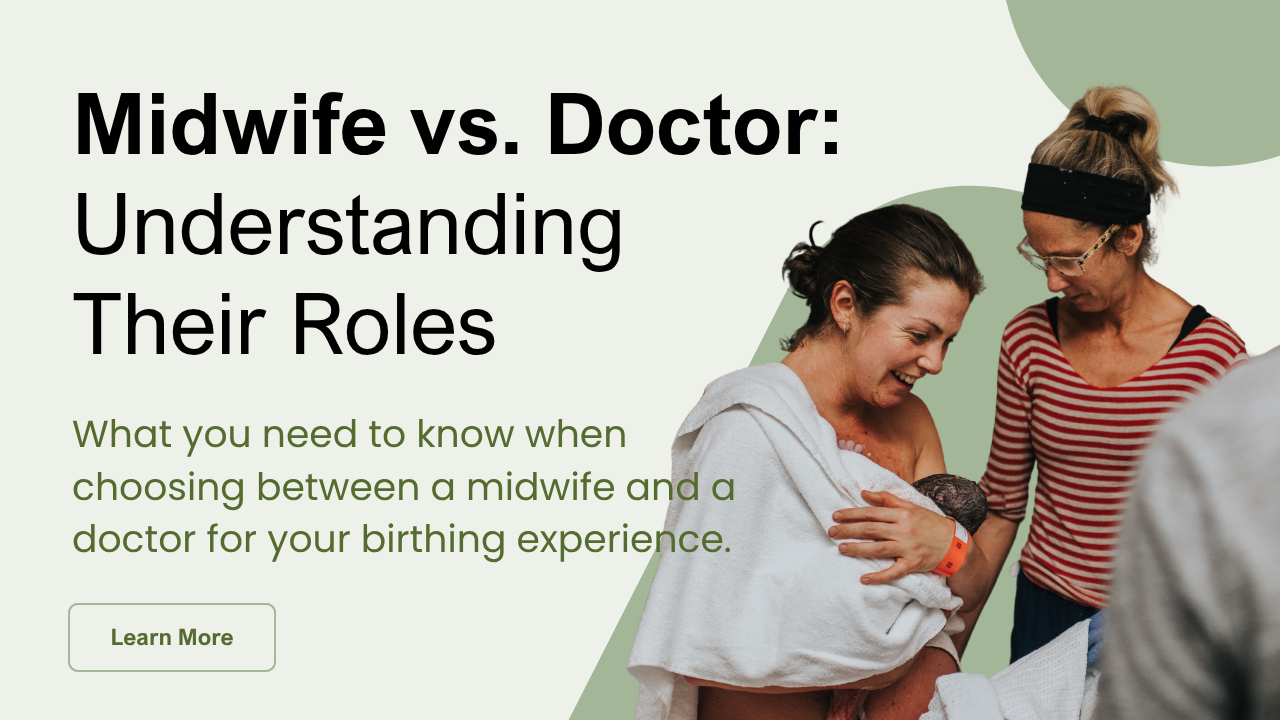
Midwife vs. Doctor: Understanding Their Roles
Choosing between a midwife and a doctor (OB-GYN) is one of the most important decisions during pregnancy. Both provide high-quality care, but they differ in training, philosophy, setting, and approach to interventions. Many women now choose collaborative care (midwife-led with doctor backup) for the best of both worlds.
Quick answer:
Midwife → Best for low-risk pregnancies and those wanting natural, hands-on, low-intervention birth.
Doctor (OB-GYN) → Best for high-risk pregnancies or when medical interventions may be needed.
Collaborative model → Often the safest and most satisfying option for many families.
What Does a Midwife Do During Pregnancy and Birth?
A midwife specializes in supporting physiologic (natural) birth. They emphasize education, nutrition, emotional support, and preventive care.
Key roles of a midwife:
- Provide continuous presence and hands-on support during labor.
- Use non-medical comfort techniques (movement, positioning, breathing, hydrotherapy).
- Promote continuity of care (often the same provider throughout).
- Order labs, ultrasounds, and prescribe certain medications (especially Certified Nurse-Midwives).
- Achieve excellent outcomes for low-risk pregnancies with lower intervention rates.
Midwives cannot perform surgery. If a C-section or advanced intervention becomes necessary, they transfer care to an obstetrician.
What Does a Doctor (OB-GYN) Do During Pregnancy and Birth?
An OB-GYN is a medical doctor with specialized surgical training focused on pregnancy, labor, and reproductive health.
Key roles of a doctor:
- Manage high-risk conditions (preeclampsia, multiples, gestational diabetes, previous C-section, etc.).
- Perform C-sections, forceps, and vacuum deliveries.
- Provide immediate access to operating rooms, anesthesia, and NICU in hospital settings.
- Work with a full medical team (nurses, residents, anesthesiologists).
Doctors are ideal when complications are present or anticipated.
Collaborative Care:
Midwife + Doctor Backup (Often the Best Option)
Many women choose a midwife-led model with obstetrician backup.
The midwife provides primary prenatal and labor care. The doctor becomes involved only if complications arise.
This model frequently results in high patient satisfaction, lower intervention rates, and strong safety outcomes when transfer protocols are clear.
Who Should Choose a Midwife vs a Doctor?
Choose a midwife if you:
- Have a low-risk pregnancy.
- Want a natural or unmedicated birth.
- Prefer longer prenatal visits and continuous labor support.
- Are considering a birth center or home birth (where available and appropriate).
Choose a doctor (or collaborative care) if you:
- Have a high-risk pregnancy or medical conditions.
- Prefer hospital birth with full medical resources immediately available.
- May need or want access to epidurals, inductions, or surgical options.
Key Questions to Ask When Choosing Your Provider
- What is your philosophy on natural birth and interventions?
- How often are you personally present during labor?
- What is your C-section rate?
- Who covers for you if you’re unavailable?
- Do you support VBAC, water birth, or unmedicated birth?
- How do you handle transfers or emergencies?
Pro tip for your birth plan:
Clearly state your preference for midwife-led or doctor-led care and include backup plans.
Frequently Asked Questions
Is a midwife as safe as a doctor for low-risk pregnancy?
Yes. For low-risk pregnancies, midwife-led care is associated with excellent outcomes, lower intervention rates, and high satisfaction when clear transfer pathways to medical care exist.
Can midwives deliver babies in hospitals?
Yes. Many midwives work in hospitals, birth centers, and (in some regions) attend home births.
Do I need to choose only one?
No. Collaborative care models that combine midwife primary care with obstetrician backup are increasingly common and often ideal.
What if complications develop?
Midwives are trained to recognize complications early and transfer care to an OB-GYN when needed. Hospitals with collaborative models make this process seamless.
Ready to prepare for a positive birth experience?
Explore our birth preparation resources and prenatal fitness programs designed to support both midwife- and doctor-led births.
Midwife vs Doctor: Key Differences at a Glance
| Aspect | Midwife | Doctor (OB-GYN) |
|---|---|---|
| Philosophy | Natural, holistic, woman-centered (empowering approach to birth) | Medical, safety-focused, and ready for interventions |
| Training | Specialized midwifery education (often after nursing) | Medical school + 4+ years OB-GYN residency |
| Best for | Low-risk pregnancies, natural/unmedicated birth | High-risk pregnancies or anticipated complications |
| Typical setting | Birth centers, home births, and some hospitals | Primarily hospitals |
| Labor support | Continuous, hands-on support | Oversees care; often present mainly for delivery |
| Interventions | Lower rates of induction, epidural, C-section | Full access to medical interventions |
| C-section capability | Refers to an OB if needed | Can perform C-sections |
| Prenatal visit length | Longer, more personalized | Shorter, more focused on medical checks |
Summary of Key Differences:
Philosophy:
- Midwife: Natural, holistic, and empowering approach to birth.
- Doctor: Medical, safety-focused, and ready for interventions.
Training:
- Midwife: Specialized midwifery training (often after nursing).
- Doctor: Medical school + 4+ years of OB-GYN residency.
Best For:
- Midwife: Low-risk pregnancies and those wanting natural or unmedicated birth.
- Doctor: High-risk pregnancies or when complications are anticipated.
Typical Setting:
- Midwife: Birth centers, home births, and some hospitals.
- Doctor: Primarily hospitals.
Labor Support:
- Midwife: Hands-on, continuous support throughout labor with fewer interventions. And postpartum recovery.
- Doctor: Oversees care and is usually present for delivery (care is often team-based).
Interventions & Procedures:
- Midwife: Lower rates of induction, epidurals, and C-sections. Cannot perform surgery.
- Doctor: Full access to medical interventions, including C-sections, forceps, and vacuum deliveries.
Time With You:
- Midwife: Longer prenatal visits and extended labor support.
- Doctor: Shorter prenatal visits with more reliance on hospital staff.
C-Section Capability:
- Midwife: Refers to an OB if a cesarean is needed.
- Doctor: Can perform C-sections.
Recommendation:
For low-risk pregnancies seeking a natural birth, a midwife often provides excellent personalized care. For high-risk cases, an OB-GYN (or collaborative care) is the safer choice. Always discuss your preferences openly and ask about backup plans.
Related posts:
Sources:
Article review: Article updated and reviewed by Kerryn Boyle on 02/09/2026.
Author