7 Best Labor and Birthing Positions (Avoid Tearing)
Oct 20, 2026Best Positions to Give Birth
There is no single 'best' position to give birth, but upright and supported positions, especially those using a chair are among the most effective for many women.
They use gravity, help open the pelvis, encourage optimal baby positioning, reduce back pain, and can lower the risk of tearing compared with lying flat on your back.
When I work with pregnant mamas preparing for labor; I work on finding what is most comfortable for them and their personal needs.
Movement and changing positions throughout labor often make contractions more productive and less painful. Practice these ahead of time so you feel confident using them.
Key Considerations
1. Upright and forward-leaning positions generally support progress and comfort.
2. A simple sturdy chair is one of the most useful labor tools.
3. Side-lying, hands-and-knees, and supported squats are excellent options that can help reduce tearing.
4. Avoid prolonged lying flat on your back when possible.
5. Have continuous support (partner or doula) and change positions often.
Why Position Matters in Labor
Moving and choosing positions helps the baby rotate and descend, can enlarge pelvic diameters, stimulates natural pain-relief hormones, and gives you a greater sense of control.
Research and clinical experience consistently favor upright positions over the traditional flat-on-the-back (lithotomy) position for shorter second-stage labor and fewer interventions.
7 Best Labor Positions (Including Chair Variations)
1. Squatting: Opens the pelvis (potentially by up to 2 cm), uses gravity, and can reduce pushing effort. Use a chair or bar for support if needed.
2. Standing / Supported Squat: Works with gravity and helps baby align. Lean on a partner, wall, or chair.
3. Rocking / Chair Hip Circles: Gentle pelvic movement encourages descent and eases back pain while conserving energy.
4. Sitting / Throne Position: Upright sitting on a chair, bed edge, or birth stool uses gravity and allows rest. Great for monitoring.
5. Leaning Forward / Kneeling: Ideal for back labor. Lean over a chair, bed, or birth ball.
6. Hands and Knees: Relieves back pressure, allows pelvic tilts, and gives easy access for partner massage or counterpressure.
7. Side-Lying: Excellent resting position, works well with epidurals, supports oxygen to baby, and is associated with lower rates of tearing. Partner can support the top leg.
7 Specific Chair Positions for Labor
1. Supported Kneeling: Kneel facing the chair, lean forward, and breathe deeply.
2. Chair Hip Circles: Sit or lean on the chair and make slow circles to mobilize the pelvis.
3. Chair Child's Pose: Rest forehead on the chair seat or edge for calm, supported relaxation.
4. Supported Forward Fold: Hands on the chair, lean forward to take pressure off the back.
5. Pedaling in Forward Fold: Gentle alternating leg movement while leaning for hip mobility.
6. Supported Squat: Hold the chair and lower into a squat (or press forehead against it for nervous-system calm).
7. Seated Forward Lean: Sit backward or lean forward on the chair to stay upright without slouching (slouching can encourage posterior baby position).
Tips for Success
- Practice these positions in the third trimester.
- Change positions every 30-60 minutes or as your body asks.
- Combine with breathing techniques and a supportive birth partner or doula.
- Tell your care team your preferences; many hospitals support upright and side-lying births.
- Side-lying and hands-and-knees are frequently cited as helpful for reducing tearing risk.
When Certain Positions May Be Limited
Epidurals, continuous monitoring, high blood pressure, or medical conditions may restrict full mobility. Even then, side-lying, supported sitting, and limited upright options often remain available. Always follow your provider's guidance.
During labor, you may need support from a friend or Doula.
Before you go into labor, let them know the birthing positions you want so that they can help remind you when the time comes.
Arrange to have continuous support in labor from a professional labor assistant (a doula) or a close friend or family member who makes you feel safe and confident. Ask them to remind you to try different positions or activities in labor.
A good idea is to make a list of the positions that you like best and bring it with you.
My Birth Preparation program is about you practicing the best positions and movements before your labor begins, so you and your partner feel comfortable and confident using them.
What is labor?
Labor is the process of childbirth, starting with contractions of the uterus and ending with the delivery of the baby.
10 Signs of Labor
- Stronger, more frequent contractions
- Water breaks
- Baby drops
- Cervix dilates
- Cramps and increased back pain
- Weight gain stops
- Fatigue
- Vaginal discharge changes
- Loose-feeling joints
- Diarrhea
Am I going into labor? Should I call the doctor?
Throughout your prenatal appointments, you doctor should have advised you what to do if you think you're going into labor. You should also know your due date.
Labor contractions won't all be exactly spaced out. If you find that they are becoming pretty consistent, more painful and longer (30 to 70 seconds each), then you should be calling your doctor.
What if you are not sure?
I would advise you that for peace of mind you call your health care professional and explain what's going on. Now is not the time to be feeling embarrassed or worry about calling outside of office hours.
Always call your doctor or midwife if:
You experience any bleeding or bright red discharge (not brown or pinkish).
Your water breaks - especially if the fluid looks green or brown.
You experience blurred or double vision, a severe headache or sudden swelling.
How I Avoided 3rd Degree Tear during Labor Video
My Favorite Positions and Movements
1. Squatting during Labor
You will likely use this squatting position only late in labor or during delivery itself. Like standing, squatting opens up the pelvis to give your baby more room to move on down.
Pros
- Encourages rapid descent.
- Uses gravity.
- May increase rotation of baby.
- Excellent for fetal circulation.
- May increase pelvis diameter by as much as 2 centimeters.
- Requires less bearing-down effort.
- Your thighs keep baby well aligned.
- Allows freedom to shift your weight for comfort.
- Allows excellent perineal access.
Cons
- Can be tiring.
- Sometimes hard for health care provider to hear fetal heart tones.
- May be hard for you to assist in birth if you wish to do so.
- Possible increased blood loss.
2. Standing during Labor
Standing helps you work with gravity, allowing your pelvis to open and your baby to move down into your birth canal. Leaning against a wall or your partner for support during contractions is best.
Standing Supported Squat Pros
- Allows you to be supported by your standing or sitting partner.
- Takes advantage of gravity.
- Realigns your pelvis to increase the opening.
- Movement causes changes in your pelvic joints, helping your baby through the birth canal.
- Makes contractions feel less painful and more productive.
- Helps your baby line up with the angle of your pelvis.
- Can increase your urge to push in the second stage of labor.
Cons
- Your partner needs to be strong.
- Can be tiring for both of you.
- Possible increased blood loss.
3. Walking during Labor
- Baby is well aligned in your pelvis.
- May speed labor.
- Reduces backache.
- Encourages descent.
- Uses gravity.
- Contractions are often less painful.
Cons
- Not recommended if you have high blood pressure
- Can only be used with continuous electronic fetal monitoring if telemetry unit is available
Rocking, either on a chair or swaying back and forth, allows your pelvis to move and encourages the baby to descend.
4. Sitting as Birth Position
Did you know that sitting can ease the pain of contractions? And allow gravity to assist in bringing your baby down into the birth canal. Sitting also helps to open up your pelvis.
Pros
- Good for resting.
- Uses gravity.
- Can be used with continuous electronic fetal monitoring.
Cons
May not be possible if you have high blood pressure.
5. Leaning Over or Kneeling
Leaning forward or over a stack of pillows on a bed can be helpful when you have back labor because it encourages the baby to move forward, taking the pressure off your back.
Pros
- Can help shift the baby if needed.
- Uses gravity.
- Birth ball can be used.
- Contractions are often less painful and more productive.
- Baby is well aligned in your pelvis.
- Relieves backache.
- Easier for your labor partner to help relieve your back pain.
- May be more restful than standing.
- Good for pelvic rocking.
- Less strain on your wrists and arms.
Cons
- Hard for health care provider to help with birth.
6. Hands and Knees
This position allows you to do pelvic tilts for comfort, while giving your partner great access to your back for massage and counter pressure.
7. Side-lying
Lying on your side is better than lying on your back because it doesn't compress the major veins in your body.
Pros
- Makes contractions more effective.
- Easier for you to relax between contractions.
- Can slow a birth that's moving too fast.
- Helps get oxygen to the baby.
- Good resting position.
- Helpful if you have elevated blood pressure.
- Works with epidural.
- Your labor partner can support your legs.
- Lowers chances of tearing.
- Good access to perineum.
Cons
- May be hard for health care provider to access fetal heart tones.
- No help from gravity.
- If no one can hold your legs, you must support them on your own.
- You may feel too passive in this position.
Optimal Baby Position for Labor Video
Labor Positions for a Comfortable Delivery
So what labor positions are most comfortable?
To answer this question, I want you to know that the most comfortable labor position is the position that you feel most comfortable in!
In saying that, here are some positions that may be extra helpful to you:
1. If you have an epidural:
When you have an epidural, you won't be able to walk around. There are still some labor positions will help such as; sitting or lying on your side, even when you're numb from the waist down.
2. If you have back labor
You can often relieve your pain that comes from back labor by leaning over, kneeling, or getting onto your hands and knees .
3. If you're being continuously monitored
You can rock, squat, lie or sit on your side during labor. Yes, even if you are being monitored for contractions and fetal heart rate.
4. When you're delivering your baby
Side-lying may be the easiest delivery position for your practitioner. But for you, it may be more comfortable for you to deliver while squatting or on hands and knees.
Are there any risks to any labor positions?
Lying on your back is not ideal but is OK if it suits you. You see lying on your back with a full-term baby inside your uterus can put pressure on important blood vessels, possibly compromising blood flow to the baby.
Do any labor positions make childbirth easier?
I find that upright positions such as standing, walking, squatting and sitting are ideal. Remember, this is about you finding the best birthing positions for you.
Now, I want to chat about the best labor and delivery positions using a chair or a cushion.
Movement in these positions with the support of a chair can help to relax your mind and body in preparation and during labor. I used them to have a natural, drug-free labor and quick birth of my baby boy and I want to share them with you too.
These birth preparation poses can be done using a stable chair or the side of the bed or couch.

Relax and Feel Safe
It's also important to practice these before going into labor so you are familiar with them and can choose which ones you would like in labor.
I used many of these throughout my labor and especially in early labor when at home.
I used the dining room table and the kitchen bench to lean on rather than a chair, and it worked for me. I set myself up a yoga mat on the floor next to the couch so I could kneel down and feel supported with my knees.
My Online Program
As part of my birth program I detail for you how you can go into birth feeling strong, empowered and informed.
I have been teaching women theses techniques for years, and used them in my own incredible drug-free natural labor.
In this post I will detail for you how you can use a chair (or couch) and then using just the support of cushions or, just YOU!
Labor and Delivery Positions Using a Chair
These next 7 positions involve using a chair.
1. Supported Kneeling

Focusing on deep slow breaths here. Having something under your knees to support can be helpful.
Relax and focus on your breathing, whilst trying to let your weight drop into the support of the chair.
2. Chair Hip Circles

Conserving energy is so important, particularly in that early stage of labor. These movements help with the hips and the back and your progression through labor.
Movement is key in labor, but slow controlled movement where you don't expend too much of your energy is what you want.
3. Chair Child's Pose

Resting down in a supported child's pose.
You may find you just drop into this on the side of the bed, but personally I find a harder surface like the chair or even a couch helps to settle the nervous system when you gently press your forehead onto the edge.
4. Supported Forward Fold

Just simply having your hands on the chair and leaning back can help take the weight off your back. This can also be done on the edge of the chair.
5. Peddling in Forward Fold

This is great for the hips and assisting the progression of your labor. Again, movement is key in those early stages particularly.
Get yourself into a rhythm with this and it will help. Some music might help you with this, be sure to check out my Birth Prep Music Playlist
6. Supported Squat

Pressing your forehead against the hard surface of the chair can help settle the nervous system. I used this in the shower in the hospital, holding onto the bars in the shower and dropping down into the squat and coming up again.
I felt a needs to be lower and this support helped me do this. The water on my back from the shower was blissful too.
7. Supported forward fold on a chair

Trying not to slouch on the couch can be hard, especially later in your pregnancy. But trust me, it's not good for you to slouch.
Not good for you, your back or the position of your baby.
Slouching encourages posterior positioning of your baby, and you do not want your baby to be in posterior position.
Ask any mother who has endured 'back labor' with baby' spine against your spine. It can be painful and best avoided.
Be Strong and Confident
Every woman deserves to go into birth feeling strong, empowered and informed. This is key to owning your birth experience. It's what I did and what I teach my PregActive Mama's to do. And I'm here to help you too.
Because I believe you are totally going to own your birthing experience and transition into motherhood with a positive memory of the day your baby arrived into the world.
10 Best Birthing Positions Video
5 Labor and Birthing Positions Using Cushions
You're about to discover the 5 best labor and birthing positions for you and baby using only cushions. Learn these and be empowered for labor!
If you don't have any equipment, then I recommend you use cushions. Gather up a pile and try out these positions for labor.
1. Incline side lying supported by cushions

Working with gravity in this rested side lying position is a great position both for the rest between contractions, but also during contractions, especially later in your labor.
2. Supported Child's Pose

Allow your body to relax, open and dilate in this blissful supported child's pose.
Perfect on the bed with cushions to lie on.
You don't actually need any equipment to have a natural labor, here are a few labor and birthing positions that are safe for you and baby that require no equipment.
3. Child's Pose
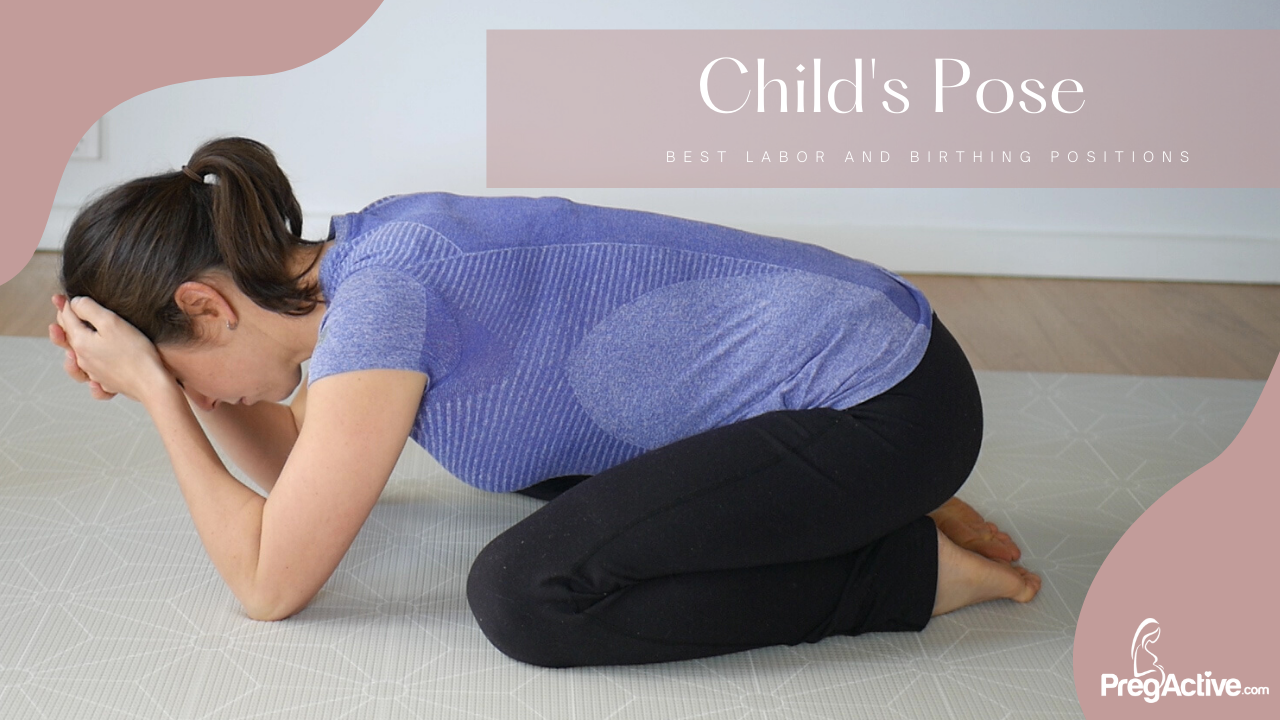
Being close to the ground can help you to feel grounded. You can also do this on the bed.
Having your knees wide apart can help open the hips, just be careful not to go too low to the ground.
4. Kneeling Hip Circles on Elbows

This is so grounding and a good way to relieve discomfort from your back in labour. You are working against gravity with this pose. And useful if you are needing to slow down the labor.
But ideally you want your elbows to be higher (like on a chair, couch or side of the bed) if you are wanting to work with gravity and encourage the baby down.
5. Kneeling Hip Circles on Hands

This is so nice, just to drop down into all fours and do these slow, rhythmic circles. Be mindful of your wrists in this pose, I personally prefer having my elbows on the side of the chair, couch or bed in a more upright position.
You are soon to meet your gorgeous baby, and that is certainly something to be excited about.
I work with so many women that come to me fearing birth.
And after working with me and my birth program they feel stronger, more empowered and completely informed going into the birthing experience.
You are going to be the most incredible Mama-bear, remember that.
My Final Advice
The best position is the one that feels most comfortable and productive for you in the moment. Prepare a short list of preferred positions, practice them, and stay flexible. Continuous support makes a big difference.
Explore PregActive's Birth Preparation program for guided practice of these positions and more labor techniques.
Educational only, discuss your birth preferences with your healthcare provider.
References
Labor and Birthing Positions - Cleveland Clinic
11 best birthing positions to consider during labor and birth - The Mother Baby Center
Article review: Article updated and reviewed by Kerryn Boyle on 20/10/2026.
Author