The PregActive Hug & Wrap Technique: Pelvic Floor and Core Relief
Sep 01, 2026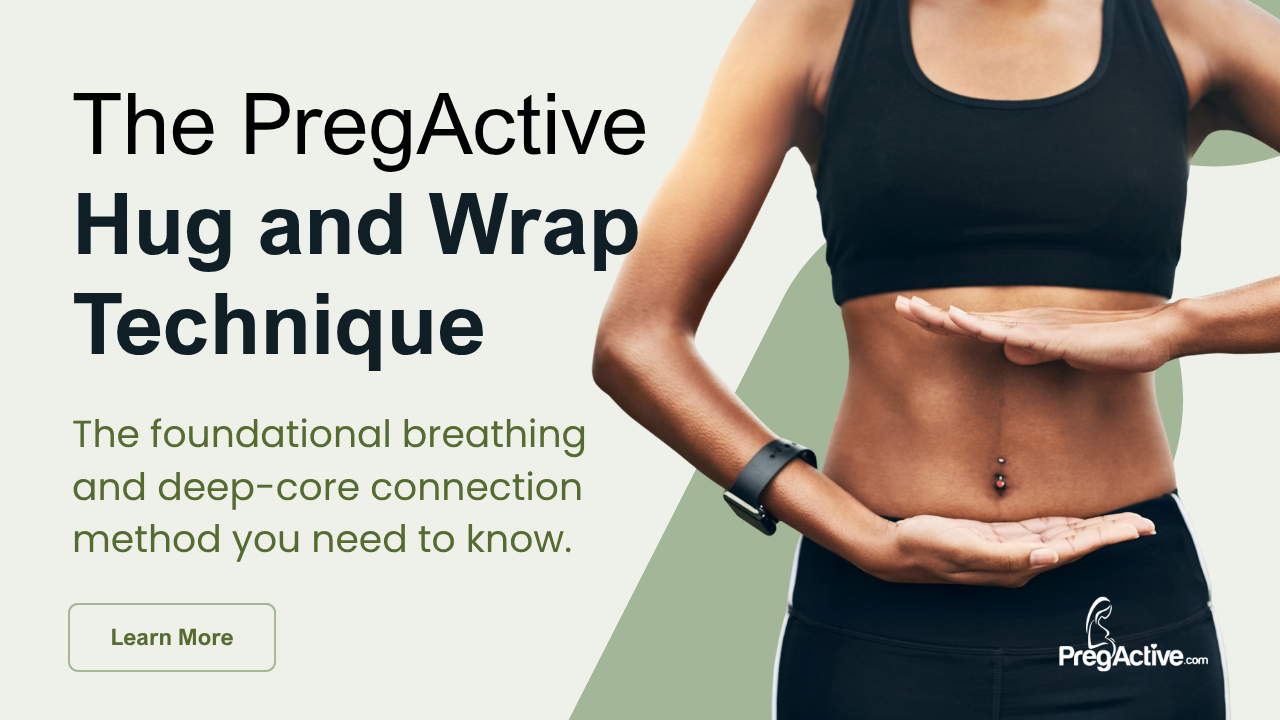
The PregActive Hug & Wrap Technique
The 'Hug & Wrap Method' is PregActive's signature technique for connecting breath, pelvic floor, and deep core so they work as one coordinated unit. Old school Kegels do not give you the complete results you need.
Why It Exists
During pregnancy the growing uterus changes how pressure moves through the abdomen and pelvis. Postpartum, the tissues are still recovering.
When intra-abdominal pressure (IAP) isn’t managed well, it can push outward (coning/doming along the midline) or downward (onto the pelvic floor).
Hug and Wrap teaches the body to manage that pressure correctly so the deep core and pelvic floor share the load instead of one overloading the other.
What It Helps Address
1. Coning or doming of the abdomen
2. Leaking with movement, coughing, or sneezing
3. Back pain and pelvic girdle pain
4. Feeling of heaviness or lack of support
5. Fear of 'doing something wrong' when exercising
6. Building a safer foundation before returning to heavier strength work
How It Differs from Common Cues
Many programs say 'draw your belly button to your spine,' 'brace,' or 'do your Kegels.'
These often lead to:
1. Sucking in from the top down
2. Holding the breath
3. Bearing down into the pelvic floor
4. Over-gripping the outer abs while the deep system stays disconnected
Hug & Wrap prioritises coordination and pressure management first. The 'wrap' is a gentle, supportive engagement rather than a hard brace, and it is always paired with the breath and pelvic floor lift.
Practical Outcome
Once the pattern becomes automatic, everyday movements and workouts feel more supported. Squats feel more stable, carrying the baby or toddler feels stronger, and the constant background worry of 'is this safe?' reduces.
It is designed to be used both in the 12-minute PregActive sessions and in daily life (lifting, getting out of bed, carrying shopping, etc.).
In short, Hug & Wrap is the foundational skill that lets everything else in the PregActive system work more effectively. Ffrom trimester-specific strength work through to postpartum recovery and return to heavier training.
How to Practice the Hug & Wrap Method
This is the foundational skill in PregActive. It teaches your body to manage pressure correctly so your pelvic floor, deep core, and breath work together. Master this first — everything else builds on it.
The Sequence
Breathe → Lift → Wrap → Move
Do not skip or reverse the order.
Step-by-Step Practice (Start Here)
Best starting position: Lying on your back with knees bent and feet flat (or side-lying if you're further along in pregnancy and prefer it). Place one hand on your lower ribs and the other on your lower belly so you can feel what is happening.
1. Breathe
Inhale slowly through your nose. Let your ribs expand outward and backward (360° breathing). Your belly can soften slightly. Avoid forcing the belly to rise dramatically or flaring the ribs upward.
Exhale gently through pursed lips (as if blowing out a candle or fogging a mirror).
2. Lift
On the exhale, gently lift your pelvic floor. Think of the muscles around your urethra, vagina, and anus drawing upward and inward - like an elevator going up one floor, or closing and lifting a soft drawstring.
It should feel light and controlled, not a hard clench or bearing down.
3. Wrap
While still exhaling and holding the gentle pelvic floor lift, add the deep core engagement. Imagine wrapping a wide, soft belt around your lower and mid-abdomen, or giving your baby (or lower belly) a gentle hug from the sides and back.
This is the transverse abdominis (your natural corset) drawing inward and creating a supportive tension. It should feel firm but not rigid. Your outer abs should not bulge or grip hard.
4. Move (once the connection is established)
Maintain the coordinated Breath-Lift-Wrap feeling and then add a simple movement:
1. Pelvic tilt
2. Heel slide
3. Marching in place (lying or standing)
4. Sit-to-stand
5. Bodyweight squat
6. Carrying or lifting something light
Only progress the movement once you can keep the connection without losing it, holding your breath, or feeling pressure push downward or outward (coning).
How It Should Feel
1. Supportive and stable, not braced or rigid
2. A sense of 'closure' and lift through the centre
3. Pressure managed (no bulging along the midline, no heavy downward push into the pelvic floor)
4. You can still breathe
Common Mistakes to Avoid
1. Sucking the belly button hard toward the spine (this often disconnects the system)
2. Holding your breath or bearing down
3. Only doing a Kegel without the wrap
4. Gripping the outer six-pack muscles or glutes instead of the deep system
5. Trying to 'pull in' from the top down
6. Rushing into movement before the connection is clear
Practice Plan
1. Week 1-2: Practise the Breath → Lift → Wrap sequence only (no big movements) for 5-8 minutes daily in a quiet position. Aim for 8-10 good repetitions.
2. Then: Add simple movements while maintaining the connection.
3. Ongoing: Use it every time you exercise, lift, carry, get out of bed, or stand up from a chair. It should become automatic.
Tips for Success
1. Start with shorter exhales if a long one feels hard.
2. Use your hands for feedback - one on ribs, one low on the belly.
3. If you feel coning, leaking, or heaviness, stop the movement, reset the Breath Lift Wrap, and try a smaller range.
4. Consistency matters more than intensity. A few quality repetitions daily beat occasional long sessions.
Once this pattern feels natural, you will notice squats, carries, and everyday movements feel more supported, and common pregnancy or postpartum symptoms often ease because pressure is being handled correctly instead of forced outward or downward.
Practise slowly at first. Quality of the connection is everything.
What to Expect
The PregActive Hug & Wrap technique is a foundational breathing and deep-core connection method designed to manage intra-abdominal pressure (IAP), protect the pelvic floor, support the growing belly, reduce common pregnancy symptoms (pregnancy back pain, pelvic girdle pain, leaking, coning), and create a strong base for safe strength training when pregnant and postpartum recovery.
It prioritises coordination between the diaphragm, pelvic floor, and deep abdominal muscles (especially the transverse abdominis) rather than generic “suck in” or forceful bracing.
The goal is controlled, supportive pressure management so you can move and load safely without increasing strain on the pelvic floor or linea alba.
Hug & Wrap Technique Core Principle
On the exhale you first gently lift the pelvic floor, then wrap (or hug) the lower and mid abdominals around the belly like a soft corset.
This creates 360° support without bearing down, over-bracing, or creating excessive downward pressure.
Step-by-Step Cueing
1. Set-up / Starting Position
Sit, stand, or lie in a comfortable supported position (side-lying or semi-reclined works well early on). Soften the shoulders, jaw, and ribcage. Allow a natural, relaxed inhale first so the belly and ribs can expand gently.
2. Inhale (Relax & Expand)
Breathe in through the nose. Let the ribcage expand sideways and slightly backward (360° breathing). The belly softens and the pelvic floor gently lengthens/relaxes. Avoid forced belly pushing or chest-only breathing.
3. Exhale + Hug & Wrap Sequence
Begin the exhale through gently parted lips (or a soft 'sss' or 'shh' sound).
First: Gently lift and draw the pelvic floor upward and inward (think of lifting a blueberry with the pelvic floor muscles or stopping the flow of urine mid-stream, light, not a hard clamp).
Then: Immediately follow by wrapping/hugging the lower abdominals inward and around the belly (like gently tightening a corset or 'hugging the baby';).
The action is subtle, draw the sides and front of the lower belly toward the spine and around the uterus without sucking the upper abs in hard or flattening the belly aggressively.
Keep the ribs soft and avoid bearing down or pushing the belly out.
4. Hold & Integrate (Optional)
Maintain the light Hug & Wrap connection for a few seconds while continuing to breathe or use it as the base for movement (e.g., during a squat, hinge, or standing transition). Release fully on the next inhale.
5. Release
On the next inhale, fully let go of the pelvic floor and abdominal wrap so the system can reset. Never hold a constant hard brace.
Key Teaching Points & Common Corrections
1. Order matters: Pelvic floor lift comes before or simultaneously with the abdominal wrap. Reversing the order or only "sucking in" often increases downward pressure.
2. Intensity is light-to-moderate (roughly 20-40% effort). It should feel supportive and contained, not rigid or exhausting.
3. Avoid: forceful drawing in of the upper abs, breath-holding, bulging/coning at the midline, or pushing the belly outward.
4. Feel for even 360° support rather than just front-to-back flattening.
5. Practice first in isolation (breathing only), then layer it into daily movements (rolling in bed, standing from a chair, lifting a toddler) and finally into exercise.
Why It Matters in Pregnancy & Postpartum
1. Helps manage the increased IAP that comes with a growing uterus, reducing stress on the pelvic floor and abdominal wall.
2. Supports better posture, reduces coning/doming risk, and can ease back and pelvic girdle discomfort.
3. Builds the coordination needed for labour (controlled pushing/pressure management) and for progressive loading postpartum.
4. Forms the base of PregActive programming: every strength, mobility, and recovery session starts from or integrates this connection so women can train with confidence instead of fear.
Progression Notes
1. Early pregnancy / high symptom days
Focus purely on the breath + light connection, short holds.
2. Later pregnancy
Maintain the same light quality while the belly is larger; the "wrap" simply works around the bump.
Re-teach the sequence carefully before adding load. Use it as the foundation before returning to heavier lifts (squats, deadlifts, etc.), always monitoring for leaking, heaviness, or doming.
This method is intentionally simple, repeatable, and practical so it can be used in 12-minute sessions, daily life, and progressive strength work.
Consistent practice of the coordination itself is often more valuable than the intensity of any single exercise.
Enjoy Living with Confidence.
We help you to alleviate pain first. Then through innovative techniques you strengthen all your core muscles for lasting relief. PregActive is where answers begin.
Whether you were active pre-pregnancy or simply want to understand how to stay pregnancy fit that is safe for you and baby. PregActive gives you clarity, direction and a clear path forward.
Discover our PregActive PF and Core System >
Resources related to pelvic floor health:
Pelvic Pain Foundation of Australia: Provides practical tools, books, and resources to support management of pelvic pain.
Continence NZ PDF: Offers information on pelvic floor health, prevention, and treatment options.
The PregActive Method - Master your core. Build real strength. Peak for birth. Relieve pelvic pain, back pain & strengthen your core. Recover like a pro. Safe for you and baby.
Article review: Article updated and reviewed by Kerryn Boyle on 15/09/2026.
Author