Clamshell Exercise During Pregnancy: How to Perform and Benefits
Clamshell Exercise During Pregnancy: Description and Benefits
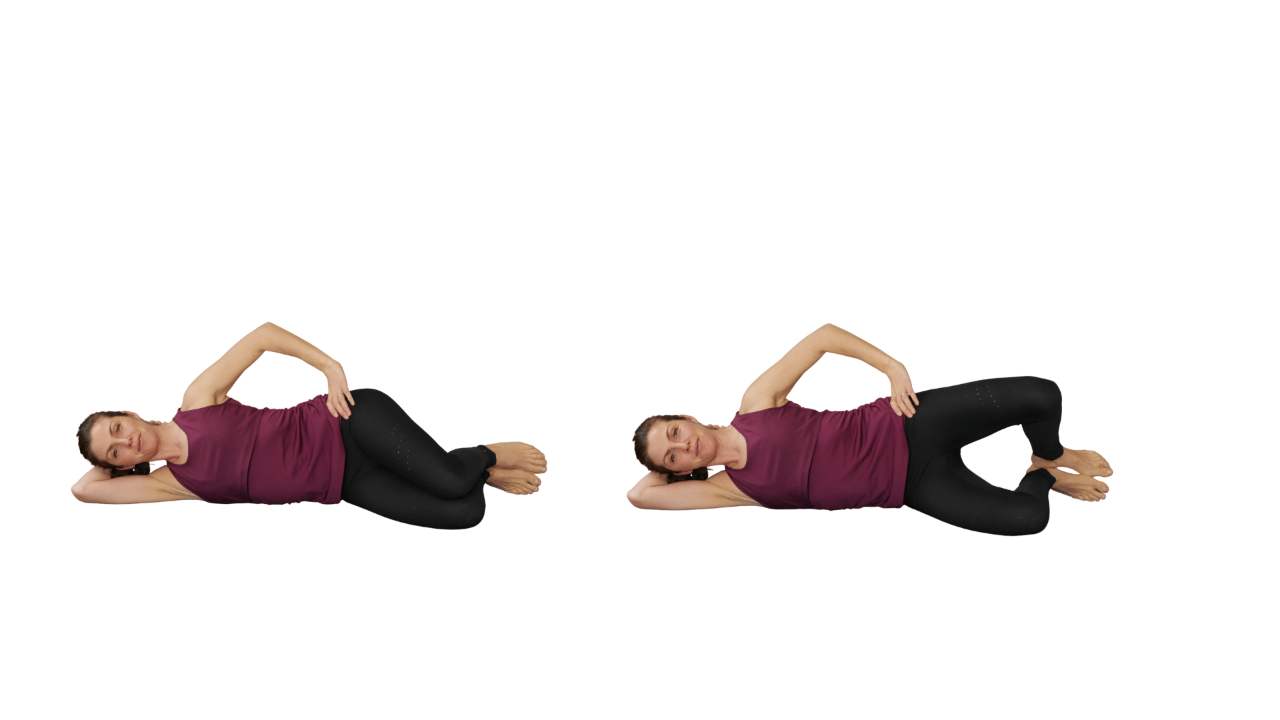
The clamshell (or "clam") exercise is a simple, low-impact side-lying movement that strengthens the gluteus medius, gluteus minimus, and outer hip rotators while promoting pelvic stability.
It mimics the opening and closing of a clamshell, making it highly suitable for pregnant women as it requires no equipment (though a resistance band can be added later) and puts minimal stress on the joints or pelvic floor.
How to Perform It Safely:
1. Lie on your side with knees bent at about 90 degrees, feet together and stacked. Rest your head on your lower arm or a pillow for comfort.
2. Engage your core and pelvic floor gently (draw navel toward spine without holding breath).
3. Keeping feet touching and hips stacked (avoid rolling backward), slowly lift your top knee as high as comfortable-usually a few inches—while maintaining neutral spine.
4. Pause briefly at the top (1-3 seconds), feeling the burn in the side of your hip/buttocks.
Slowly lower with control. Do 8–15 reps per side, 2-3 sets. Perform on both sides.
Pregnancy Modifications
Use a pillow between/under knees for support in later trimesters. Reduce range of motion if you feel any pubic symphysis discomfort.
Stop if you experience pain (especially in the front of the pelvis).
Consult your doctor or physiotherapist before starting, especially with pelvic girdle pain exercises (PGP) or diastasis recti self-check.
Key Benefits for Pregnant Women:
1. Pelvic and SI Joint Stability
Pregnancy hormones loosen ligaments, and extra weight shifts posture.
Clamshells strengthen hip abductors to support the sacroiliac (SI) joint, reducing risk of pelvic instability, lower back pain, and sciatica.
2. Glute Activation and Hip Strength
Counters "glute amnesia" from prolonged sitting; strong glutes improve balance, gait, and posture as your belly grows.
3. Lower Back and Hip Pain Relief
Many experience relief from common pregnancy aches by building supportive muscles around the pelvis and spine.
4. Better Posture and Core Support
Helps maintain alignment, easing strain on the lower back and supporting the changing center of gravity.
5. Pelvic Floor Synergy
When paired with gentle core engagement, it aids overall pelvic health and may support labor preparation and postpartum recovery.
6. Low-Risk and Accessible
Can be done daily at home, in bed, or with online prenatal fitness classes. Excellent for all trimesters when modified.
Author